
Reviewed · THE BUND TOURS
3-Hour Private Tour to Jewish Ghetto and Shanghai Bund
Shanghai’s Jewish quarter tells a remarkable story of refuge, survival, and unlikely friendship. This private tour connects the Jewish Refugees Museum with old stone-gate homes, quiet lanes, and the Bund buildings shaped by British-Jewish families. The result is a thoughtful look at 1930s and 1940s Shanghai that many visitors otherwise miss.
I like two things here: you get time to study photographs, films, and personal objects at the museum, then walk through places tied to that story, and your guide can connect the refugee district with the Sassoon family’s mark on the Bund. Guides such as Mason, Sunny, Lea, Annie, and Aron have led especially clear and personal visits. The main drawback is that this is a short tour, so museum lovers may wish for more time.
Key points at a glance
- A rare look at wartime Shanghai: Learn how European Jewish refugees found safety in China during a dangerous period.
- The Ohel Moishe Synagogue: Spend about 80 minutes with exhibits, photographs, films, and personal belongings.
- Old stone-gate homes: Walk through former refugee quarters and see how the district fits into present-day Shanghai.
- The Bund connection: Visit the Peace Hotel and other British-Jewish landmarks tied to the Sassoon family.
- Private transport: Groups of one to four use a local premium Uber, while larger groups get an air-conditioned minivan.
- Flexible planning: Choose a morning or afternoon departure, with downtown hotel pickup included.
Why this Jewish Shanghai tour matters
Shanghai is usually sold through its skyline, shopping streets, gardens, and colonial waterfront. Those sights are worthwhile, but they can leave out the people who made the city what it became. This tour gives you a different entry point: the Jewish communities that lived, worked, and sought safety here.
The focus is especially strong on European Jewish refugees who arrived during the years surrounding the Second World War. Your guide places their lives within the wider story of Shanghai, rather than treating the neighborhood as an isolated memorial.
That approach matters. You see the Jewish community as part of a changing Chinese city, with its own neighborhoods, buildings, businesses, and daily routines. The story is not only about suffering in Europe. It is also about arrival, adaptation, shared space, and the difficult conditions of life in wartime Shanghai.
I would choose this tour if you want history explained in a human way. It is also a good fit if you have already seen the city’s main sights and want a more focused subject than a standard introduction to Shanghai.
More Bund Tours in Shanghai:
- Best of Shanghai Day Tour, including Jade Buddha Temple & Bund & Yuyuan Garden
★ 4.0 · 338 reviews - Yu Garden, Old Street, Bund & Zhujiajiao Water Town Bus Tour
★ 4.7 · 244 reviews - Shanghai Day Tour to Zhujiajiao Water Town, Yu Garden, Bazaar, Bund
★ 5.0 · 162 reviews
Inside the Jewish Refugees Museum and Ohel Moishe Synagogue
The tour begins with pickup from your Shanghai hotel, provided the hotel is in the downtown area. You then travel to the historic Jewish center for about 80 minutes at the Jewish Refugees Museum, located at the former Ohel Moishe Synagogue.
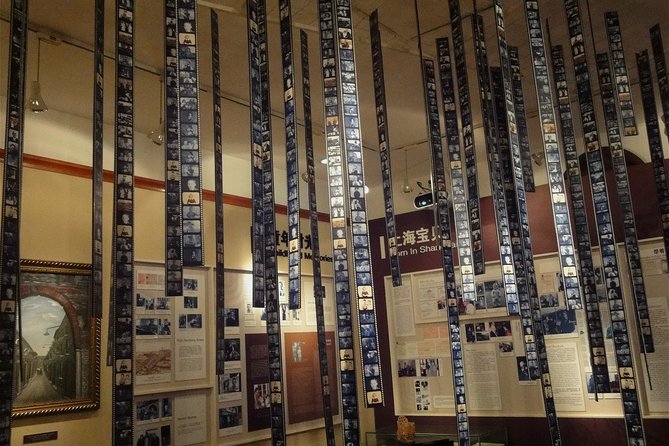
This is the anchor of the experience. The museum uses photographs, films, documents, and personal objects to show what Jewish life in Shanghai looked like. The material helps turn a large historical subject into individual lives and family stories.
Give yourself time to look closely. One of the useful features of a private visit is that your guide can adjust the pace. Mason, for example, has been praised for allowing time to examine photographs and artifacts without rushing. That is important in a museum where a quick walk through the rooms would leave many details behind.
You may also find the museum especially meaningful if your family has connections to Jewish communities in Europe or China. One person on a previous visit located the name of a family friend among the roughly 20,000 refugees connected with Shanghai. That kind of discovery cannot be promised, but it shows why the personal records here matter.
The guide’s role makes a real difference. Lea has led the story in chronological order, which can help if you know little about the subject. Sunny has explained both Jewish migration to China and the wartime refugee experience. Aron has also guided visitors through the subject with a clear command of the details.
The museum is the one stop where you should resist rushing for photographs. Listen first, then study the displays. The tour gives you about 80 minutes here, but people who read every label may wish for even longer.
Walking the old Jewish ghetto and Little Vienna
After the museum, you spend about an hour around the old Jewish neighborhood. This part is less formal than the museum, and that is exactly why it works.
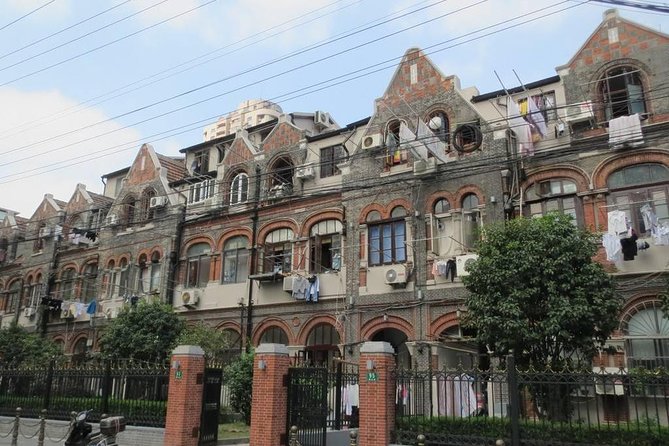
You visit the former Jewish park and old JDC center, then walk through side streets lined with stone-gate houses. These homes once sheltered thousands of refugees. Today, the district is also part of a living Shanghai neighborhood, so you see how the older buildings fit into present-day life.
The phrase Little Vienna is often used for this area because of its European Jewish character. Do not expect a preserved European village. The appeal is in the contrast: old lanes, shared courtyards, historic homes, and the surrounding Chinese city.
A particularly memorable part can be seeing a former refugee residence that is still occupied by the same family line. The visit offers a close look at the scale of these homes and how several generations have lived in a compact Shanghai setting. Access and exact stops can vary, so treat this as a possible feature rather than a guaranteed private-home visit.
This walk also gives the museum story a physical setting. Instead of seeing refugee life only through photographs, you can look at the kinds of buildings that housed people and imagine the density of the neighborhood. The lanes may feel more revealing than a polished monument because they show a district that remains part of the city.
Wear comfortable shoes. The tour is a walking experience, and the streets and back lanes are not simply a quick photo stop. Since the tour runs in all weather, bring clothing suited to the forecast. There is no need to dress formally, and practical shoes will serve you better than anything stylish but stiff.
From refugee quarters to the Peace Hotel
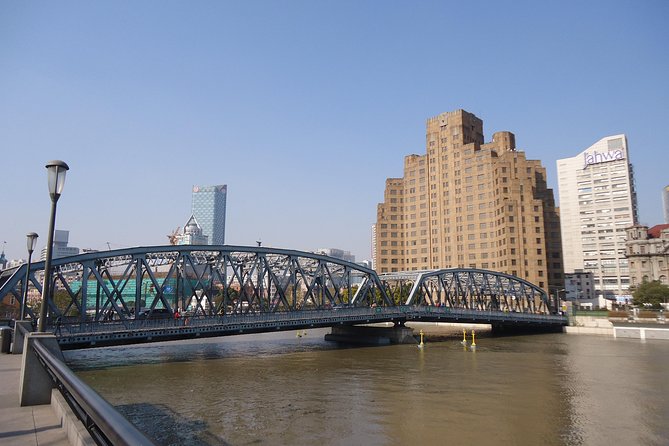
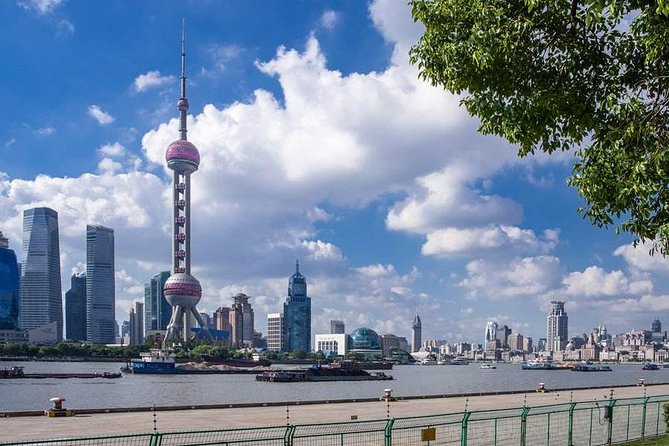
The final section moves to the Bund, Shanghai’s famous waterfront district. You spend about 50 minutes looking at the architectural and commercial side of the city’s Jewish story.
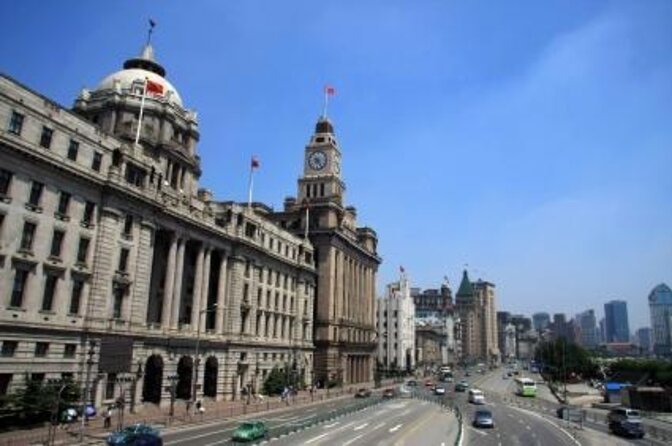
The key stop is the Peace Hotel, linked to the Sassoon family. The Sassoons were a prominent British-Jewish family whose business interests helped shape the Bund’s skyline and Shanghai’s international image. Here, the tour shifts from refugee life to wealth, finance, hotels, and colonial-era architecture.
That change in focus is useful. It shows that Jewish history in Shanghai was not one single experience. The city was home to established Jewish business families, newer arrivals, and refugees facing severe hardship. The Bund helps you see the social and economic range within that broader community.
Your guide can also place the buildings within the period of British influence in Shanghai. You will look at art-deco design and the surviving structures along the waterfront, including the Peace Hotel. This is not a full architectural tour of the Bund, so expect selected context rather than a building-by-building survey.
I like the way this final stop widens the subject. You begin with a museum about refugees, walk through a neighborhood where people lived, and finish among grand buildings associated with business and power. Those three settings make the story easier to understand.
The Bund is also a practical place to continue your day after the tour. Hotel drop-off is not included, but the tour ends in this central area, where you can continue exploring on your own or make your way elsewhere. The exact end arrangements should be confirmed with your guide.
More half-morning trips in Shanghai:
- Private 3 hour bike tour with coffee break
★ 4.5 · 38 reviews - 3-Hour Shanghai Yu Garden &Old Town Private Tour with Tea Tasting
★ 5.0 · 17 reviews - 3-Hour Private Night Tour: Beijing Foodie Experience
★ 5.0 · 53 reviews - 3-Hour Xi’an Muslim Street Food Walking Tour
★ 5.0 · 17 reviews
What private transport changes
The tour lasts about two and a half to three hours, and private transport helps keep that time useful. For one to four people, transportation is provided in a local premium Uber. Groups larger than four use an air-conditioned minivan.
That arrangement is less about luxury than efficiency. Shanghai is a large city, and the Jewish museum area is away from the Bund. Having a vehicle between the two reduces the need to work out a separate route and leaves more energy for the museum and walking sections.
Downtown hotel pickup is included. Hotels in outlying areas, including Jiading, Songjiang, Qingpu, Jinqiao, and Chuansha in Pudong, are not covered by the standard pickup service. If you stay outside the downtown area, the guide will provide instructions for meeting in a central location.
Pickup from Pudong Airport, Disneyland hotels, and the Wusongkou cruise port is not included. Cruise-port pickup may be arranged for an added fee. This is worth checking before booking, especially if you are visiting Shanghai during a short port call.
There is no standard hotel drop-off. Plan your return route in advance, particularly if you have luggage, a dinner reservation, or a flight to catch. The tour is best placed on a day when you can continue sightseeing from the Bund rather than needing an immediate transfer to the airport.
Is $90 per person a fair price?
At $90 per person, this is not the cheapest way to see the Jewish Refugees Museum. It is a reasonable price if you value a private guide, hotel pickup in central Shanghai, transport between districts, and a connected explanation of the museum, neighborhood, and Bund.
The value rises for a small group. A private experience lets you ask questions about family names, architecture, migration, or Shanghai’s wartime setting without following a large group. It also allows the guide to slow down in the museum or adjust the walking pace.
The price includes the professional English-speaking guide, private tour service, local transportation, hotel pickup within the stated area, and the entrance fee for the Jewish ghetto area. The museum admission is included according to the itinerary.
It does not include meals, hotel drop-off, outlying hotel transfers, or airport and Disneyland transfers. The tour is also not designed as a full-day sightseeing package. You are paying for a focused historical visit, not a broad tour of Shanghai.
For a couple, family, or small group with a real interest in Jewish history, I think the cost can be justified. If your main goal is simply to see the Bund, you can visit that waterfront without a guide and pay less. The tour earns its price through the historical connections and the private explanation.
The guides and the pace
Guide quality is central here because the subject needs context. You are not just looking at old buildings. You are trying to understand why refugees came to Shanghai, how the community lived, and how Jewish families influenced the Bund.
Several guides have received strong praise for different strengths. Lea has been described as clear and well prepared, with a good chronological approach. Sunny has brought useful knowledge of both Jewish migration and Shanghai culture. Mason has been especially accommodating inside the museum and has led the walk at a comfortable pace.
Annie has connected the museum visit with the Bund and broader Shanghai culture. Aron has focused closely on Jewish history in Shanghai. Robert has helped explain the contrast between the old Jewish neighborhood and more traditional Chinese districts. Ruby has been praised for an energetic and friendly style.
You cannot select a particular guide with certainty from the information provided, so consider these names examples of the guiding team rather than a promise. What you can expect is an English-speaking private guide and a tour built around conversation.
The tour is suitable for most people, but you should be comfortable walking for roughly an hour around the old neighborhood and the Bund. Children must be accompanied by an adult. Because the tour operates in all weather, check the forecast and dress accordingly.
Who should book this experience?
I would recommend this tour to anyone with an interest in Jewish heritage, wartime history, migration, architecture, or the less familiar parts of Shanghai. It is also a good choice for people who prefer a guide who can answer questions instead of a self-guided museum visit.
Families may find the museum and personal objects more approachable than a long lecture, though adults should help younger children follow the serious subject. History-minded visitors will get the most from the chronological explanation and the chance to connect documents with actual buildings.
The tour may not suit you if you want a fast list of Shanghai landmarks or a full-day city tour. The Bund receives only about 50 minutes, and the Jewish district takes priority. It is also less convenient for visitors staying outside central Shanghai unless they are willing to meet downtown.
I would book it early if your schedule is fixed. It is booked an average of 29 days ahead, and confirmation is subject to availability. Morning and afternoon departures give you useful flexibility, but you still need to allow extra time around Shanghai traffic.
Should you book the Jewish Ghetto and Bund tour?
Book this tour if you want a focused, human story rather than another quick pass through Shanghai’s headline sights. The museum gives you evidence and personal detail, the old neighborhood gives you a sense of place, and the Bund shows the community’s wider economic and architectural reach.
I especially recommend it for a small group staying downtown. You get a private guide, transport between two separated areas, and enough time to ask questions. If you are passionate about museum displays, ask at the start for as much museum time as possible.
Skip it if your itinerary is already packed with general sightseeing or if airport transfers and hotel drop-off are essential. For everyone else, this is a worthwhile way to understand a side of Shanghai that is easy to miss, with practical transport and a strong sense of place.
FAQ
How long does the private tour last?
The tour lasts approximately two hours and 30 minutes to three hours.
What are the main stops?
The tour visits the Jewish Refugees Museum at Ohel Moishe Synagogue, the old Jewish ghetto area, and the Bund.
How much time is spent at the museum?
The museum visit takes about one hour and 20 minutes.
Is museum admission included?
Admission to the Jewish Refugees Museum is included according to the tour details. The itinerary also lists the entrance fee to the Jewish ghetto area as included.
Is hotel pickup available?
Pickup is available from hotels in downtown Shanghai. Hotels in outlying areas may require you to meet the guide downtown.
Is hotel drop-off included?
No. Hotel drop-off is not included.
What transportation is used?
Groups of one to four people travel by local premium Uber. Groups of more than four use an air-conditioned minivan.
Can I choose a morning or afternoon departure?
Yes. The tour offers flexible morning or afternoon departure times.
Can I cancel for a full refund?
Yes, if you cancel at least 24 hours before the experience start time. Cancellations made less than 24 hours in advance are not refunded, and late changes are not accepted.
Newly listed around Shanghai
- All Inclusive Shanghai City Tour : Old and New Highlights★ 5.0 · 44 reviews
- Amazing Shanghai Night Lights:River Cruise &Private Transfer★ 5.0 · 8 reviews
- All Inclusive Shanghai City Tour by German-Speaking Guide★ 5.0 · 4 reviews
- All-inclusive Half-day Private Tour To Zhujiajiao Water Town★ 5.0 · 10 reviews
- 4-Hour Shanghai City Private Tour by German-Speaking Guide★ 5.0 · 8 reviews
- 4-Hour Shanghai Best Garden and Temple Tour with Tea Tasting★ 4.9 · 7 reviews
- 4-Hour Private Shanghai Shopping Tour with Local Expert★ 5.0 · 5 reviews
- 2 Day Private Shanghai Skyline to Watertown & Suzhou Garden★ 5.0 · 3 reviews
The Bund Tours, compared.
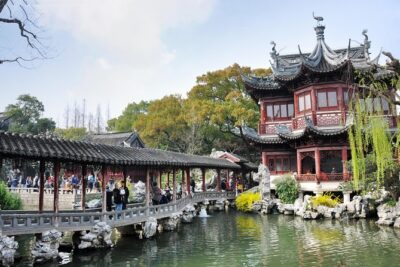
Best of Shanghai Day Tour, including Jade Buddha Temple & Bund & Yuyuan Garden
Read our review →
Yu Garden, Old Street, Bund & Zhujiajiao Water Town Bus Tour
Read our review →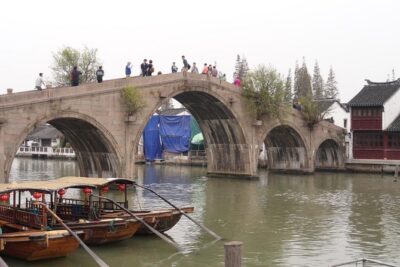
Shanghai Day Tour to Zhujiajiao Water Town, Yu Garden, Bazaar, Bund
Read our review →
Huangpu River Cruise and Bund City Lights Evening Tour of Shanghai
Read our review →
Private Yu Garden, The Bund, French Concession, Pudong Half-Day Tour
Read our review →Browse the lists this tour appears in