
Reviewed · 3-DAY EXPERIENCES
3-Day Private Beijing Tour with Airport Transfer
Beijing’s biggest sights are spread across a huge city, and this private three-day tour removes much of the guesswork. You’ll move from imperial gates to the Mutianyu Great Wall, then from royal gardens to old hutong lanes, with a driver handling the long transfers.
I like the airport pickup and drop-off, especially for a short visit, and I like the freedom of having only your own group in the car. Guides such as Barry and Candy have earned praise for clear English, patience, and quick adjustments. The tradeoff is a packed schedule, with traffic, crowds, and a long Great Wall day demanding good energy.
Key points to know before booking
- Mutianyu takes about four hours on site, with a round-trip cable car arranged to save your legs.
- The Forbidden City gets two hours, enough for a strong first look but not every corner of the palace complex.
- Day one depends on your flight time, so the hutong visit is offered only if the schedule allows.
- Your guide and private driver stay with your group, making it easier to handle Beijing’s crowds and confusing entrances.
- Barry, Candy, Vivian, Rocky, and Sunny are among the guides praised for this service, though your assigned guide is not guaranteed.
- The $559 price excludes hotel rooms and meals, but includes transportation, entrance tickets, bottled water, and airport transfers.
Why a private Beijing tour can be worth the price
At $559 per person, this is not a bargain-basement city tour. The value depends heavily on the size of your party. A solo visitor pays quite a bit for private transport, while a family or small group can spread the cost across several people.
The package covers a private air-conditioned vehicle, driver, English-speaking guide, bottled water, and entrance tickets. Hotel accommodation, meals, international flights, and visa costs are extra. That makes the price easier to judge: you are paying for time, coordination, and transport rather than a fully packaged vacation.
I see the strongest value in the airport service and the Great Wall transfer. Beijing’s major sights sit far apart, and Mutianyu is about 1.5 hours from the city by car. Having someone manage the route lets you spend your energy walking through the sights instead of sorting out taxis, tickets, and directions.
The private setup also matters at Tiananmen Square and the Forbidden City, where crowds and entry procedures can make a first visit feel confusing. You can ask questions, adjust your pace within reason, and avoid waiting for a large group to catch up.
More Airport Transfers in Beijing
- Beijing Capital Airport Layover Mutianyu Great Wall Private Tour
★ 5.0 · 189 reviews - Private Arrival Transfer: Beijing Airport (PEK or PKX) to Hotel
★ 4.5 · 139 reviews - Private Arrival Transfer from Beijing Airport to Hotel
★ 4.5 · 125 reviews
Day one: airport arrival and a possible hutong introduction
Your guide and driver meet you in the airport lobby with a sign showing your name. From there, you are driven to your hotel for check-in and a break.
The first day is intentionally light. That is sensible after an international flight, especially if you arrive early in the morning or have spent hours changing time zones. The airport transfer also gives you a smooth start without requiring you to work out Beijing transportation immediately.
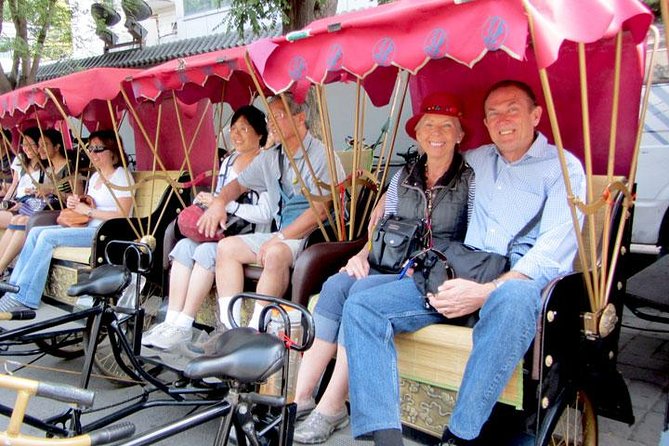
If your flight schedule leaves enough time, you visit a traditional hutong area. These old lanes offer a useful counterpoint to the grand imperial sites that fill the next two days. You may ride a rickshaw through the alleys and visit a hutong family to see how older Beijing homes are arranged and used.
Keep your expectations clear here. The hutong visit is conditional, not guaranteed as a full fixed stop. If your arrival is late or you need a proper rest, this part may be shortened or skipped.
The hutong stop is valuable because it shows Beijing at a human scale. Tiananmen Square and the Forbidden City are enormous public spaces. A narrow lane, a rickshaw ride, and a family home give you a closer look at the city’s older residential side.
Tiananmen Square: a brief look at Beijing’s ceremonial center
Day two begins with hotel pickup at about 8:00 a.m. Your guide takes you to Tiananmen Square in a private vehicle, where you have around 30 minutes.
This is a short stop, but it gives you the setting for the Forbidden City entrance. The square is broad, formal, and built for national ceremonies rather than lingering in a café. Your guide can help explain what you are seeing and direct you toward the next entrance.
Do not expect a detailed tour of every building around the square. Half an hour is enough for an orientation and photographs, then the day moves on. You should carry your valid passport, as the tour information specifically requires it on the day of travel.
The Forbidden City: two hours inside the imperial palace
You enter through the Gate of Heavenly Peace, with its familiar portrait of Chairman Mao, and continue into the Forbidden City, also called the Palace Museum.
The palace complex is the main historical sight of the morning. It was the imperial center for roughly 600 years and is described as the largest and most intact imperial palace complex in China. Two hours gives you time to cross the principal courtyards, see major halls, and absorb the scale of the place.
A guide makes a real difference here. Without help, the repeated gates, courtyards, and halls can blur together. With a clear explanation, the buildings become easier to read: public ceremonial spaces give way to more private imperial areas, and the layout begins to make sense.
The drawback is time. The Forbidden City is too large to understand fully in a quick visit. If you like architecture, court life, or museum collections, you may wish you had longer, especially since one past guide arranged access to a less visited painting gallery when time allowed.
Crowding can also shape this experience. One past visit took place during a school holiday, when the major sights were very busy. Your guide can help you keep moving, but no private tour can empty the palace grounds.
Same base, a completely different kind of day out:
- From Beijing: Mutianyu Great Wall Tours with Options
★ 4.9 · 9,216 reviews - Beijing: Forbidden City Tour(Group/Private)-Tickets Included
★ 4.8 · 7,974 reviews - Beijing: T-Square & Forbidden City Group or Private Tour
★ 4.8 · 4,446 reviews - Beijing: Mutianyu Great Wall Daily Tour with Ticket & Lunch
★ 5.0 · 3,056 reviews
Mutianyu Great Wall: the longest and most physical stop
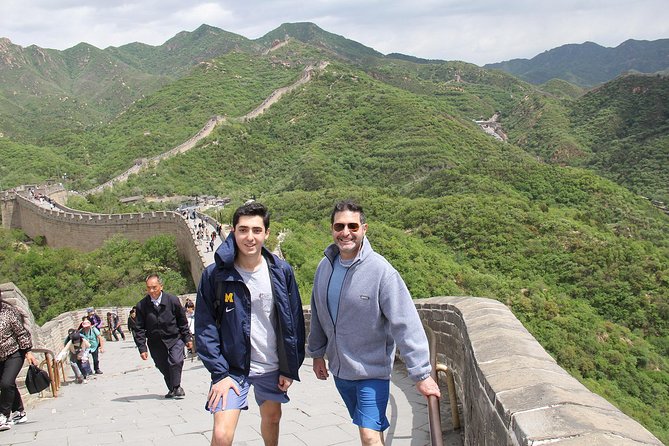
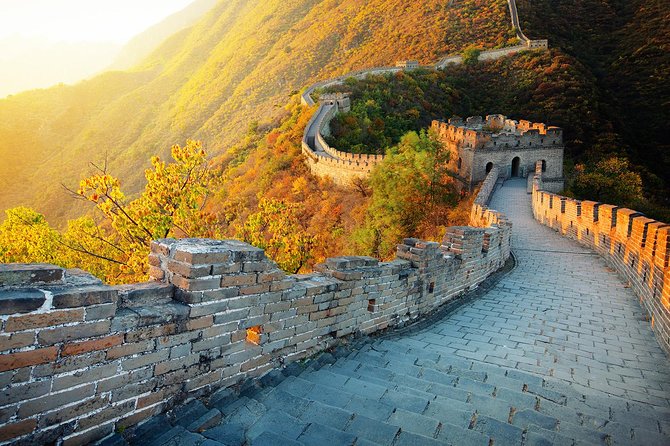
After the Forbidden City, you drive for about 1.5 hours to Mutianyu. Plan on roughly four hours at the wall, making this the most substantial stop of the tour.
Mutianyu is presented as one of the best-preserved and most popular sections near Beijing. The key benefit here is time. Four hours lets you walk, pause for views, and see more than a quick photo stop.
A round-trip cable car is arranged to save energy. That is a useful inclusion, since the wall involves uneven walking and repeated slopes. The cable car does not turn the visit into an effortless outing, however. You still need comfortable shoes, and the tour specifically advises you to wear them.
This is the part of the trip where you should judge your own fitness honestly. You can enjoy the wall at a slower pace, but anyone with limited mobility should ask the operator for more detail before booking. The supplied information says most people can participate, but it does not promise a fully accessible route.
The drive takes time, yet the private vehicle makes it less tiring than handling the journey independently. You can rest between the city and the wall, keep bottled water with you, and avoid changing vehicles.
The wall is also where weather and crowds will matter most. The tour data does not promise particular conditions, so bring practical clothing and be ready for a day outdoors. The experience is strongest when you treat the wall as a walk rather than a quick monument visit.
The Bird’s Nest: a quick Olympic photo stop
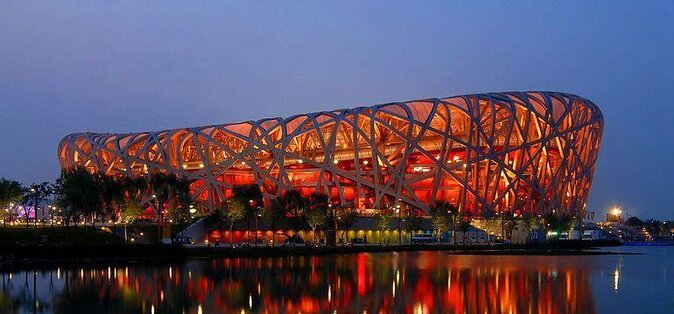
On the way back to central Beijing, the vehicle passes the National Stadium, better known as the Bird’s Nest. You stop for about 30 minutes to see the exterior of the main stadium used for the 2008 Beijing Olympic Games.
This is a photo stop, not a stadium tour. Admission is not included, and the listed schedule does not include an interior visit. I like it as a change of pace after the wall, but you should not book this experience mainly for Olympic architecture.
The short stop works well for a group that wants a photograph without giving up another hour of the day. If you have a strong interest in the stadium itself, confirm what is possible before you go.
Day three: the Temple of Heaven and imperial ritual
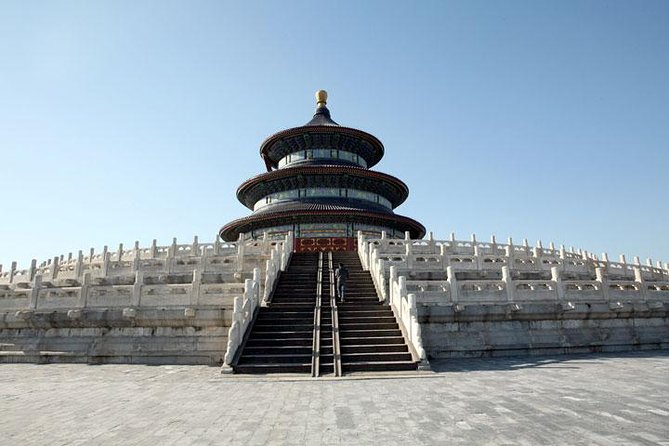
The final sightseeing day begins at the Temple of Heaven, with about 90 minutes on site.
This complex was used by emperors to worship the God of Heaven and pray for good harvests. Its purpose gives you a different view of imperial life than the Forbidden City. Instead of royal residence and court ceremony, you are looking at ritual, prayer, and the relationship between the ruler and the agricultural year.
Ninety minutes is enough to see the main areas and hear the basic story from your guide. The grounds also offer a change from the dense courtyards of the palace complex. You can expect walking, but the pace is more manageable than the Great Wall.
This stop is especially helpful if you want more than a checklist of famous buildings. Beijing’s imperial past was not only about where emperors lived. It also involved formal religious rites and appeals for favorable harvests.
Summer Palace: royal gardens around Kunming Lake
A drive of about 30 minutes takes you to the Summer Palace, where you spend around two hours.
The grounds are centered on Longevity Hill and Kunming Lake. The site is described as a museum of ancient royal gardens, and your guide leads you through the main areas.
The Summer Palace provides a softer ending to the sightseeing. You move through gardens, water, hills, and pavilions rather than huge ceremonial squares. Two hours should give you a useful taste of the setting, though the grounds are broad enough that you will not see every path.
This is another place where a guide helps you decide what deserves your attention. You can easily spend a lot of time wandering without understanding how the garden was organized or why certain viewpoints matter. At the same time, the fixed schedule means you may need to keep moving instead of stopping wherever you like.
Airport drop-off and the value of careful timing
At the end of the city tour, your guide escorts you to the airport according to your onward flight schedule. This is a major practical benefit, but it also means your final sightseeing hours depend on your departure time.
You should provide accurate flight details when arranging the tour. The plan is built around those times, and the operator does not include hotel accommodation, so make sure your own booking matches the pickup and drop-off arrangement.
The airport transfer is most useful for a short stopover or a first visit to Beijing. You do not need to learn the airport route, find a taxi, or carry luggage through several transfers. The private vehicle takes you between the hotel, sights, and airport.
Guides, cars, crowds, and the human side of the trip
The strongest personal praise centers on the guides. Barry is described as punctual, kind, helpful, and good at explaining the sights. Candy is praised for clear English, patience, humor, and a well-paced approach. Vivian and Rocky also received warm comments for their care and explanations, while Sunny was noted for her cheerful manner.
Those names are useful indicators of the company’s guiding style, but they do not guarantee who will lead your tour. Your assigned guide may be someone else. The important point is that the service is built around a private English-speaking guide rather than a recorded commentary or a large coach group.
Traffic is the main practical nuisance. Beijing is enormous, and the Great Wall transfer alone takes about 1.5 hours each way. One past visitor specifically warned about traffic, so keep your schedule realistic and do not expect every road transfer to run exactly to the minute.
The private car helps, but it cannot remove congestion. The advantage is comfort and control: your group has its own vehicle, the driver knows the planned route, and you can rest between sights.
Crowds are another consideration, especially during school holidays. A guide can help with entrances and explain where to go, but the Forbidden City and other major sites remain popular. Early starts are useful, and the 8:00 a.m. start gives you a better chance of making progress before the day grows busier.
Who should book this three-day experience?
I would recommend this tour to first-time visitors who want Beijing’s major sights without handling every transfer alone. It suits families, small groups, and people arriving by air who value a named pickup and a private vehicle.
It also fits anyone who wants a guide’s help with context. Beijing’s monuments are large, formal, and sometimes hard to read without background. The guide can turn a sequence of gates and courtyards into a clearer story.
You should think twice if you prefer slow mornings, long meals, or several hours at each museum. The schedule covers a lot in three days, and the Great Wall day is especially demanding. You should also remember that meals and hotels are not included, so the $559 cost is only one part of your total budget.
The tour is non-refundable and cannot be changed for any reason. That makes careful planning important, especially if your flights are uncertain.
Final verdict: a strong first visit, with a fast pace
Book this tour if you want the essential Beijing sights, private transport, airport handling, and an English-speaking guide in one compact package. The best parts are the well-chosen route, the generous Great Wall visit, and the support of guides such as Barry or Candy when crowds and complex entrances slow things down.
Skip it if your priority is independence, flexible museum time, or a low-cost trip using public transportation. For most first-time visitors with only three days, though, the price buys useful structure and saves a great deal of planning. Pack comfortable shoes, carry your passport, allow for traffic, and treat the hutong visit as a welcome bonus rather than a guaranteed stop.
FAQ
Does the tour include airport pickup and drop-off?
Yes. A guide and driver meet you in the airport lobby with a sign showing your name, and the guide escorts you back to the airport according to your onward flight schedule.
Are hotel transfers included?
Yes. Hotel pickup and drop-off are included as part of the private transportation service.
Is accommodation included in the $559 price?
No. Hotel accommodation is not included.
Are meals included?
No. You are responsible for meals during the three-day experience.
Which entrance tickets are included?
Entrance tickets for the listed sightseeing stops are included. The Bird’s Nest photo stop specifically does not include admission.
Is the cable car at Mutianyu included?
A round-trip cable car is arranged for the Mutianyu Great Wall visit. The provided tour information does not separately state an additional cable car charge.
What should I bring?
Bring your valid passport and wear comfortable walking shoes. The tour also provides complimentary bottled water with unlimited supplies.
More Three-Day Trips from Beijing
- Beijing: All Inclusive 3-Day Top Highlights Private Tour
★ 5.0 · 259 reviews - 3-Day Yellow Mountains, Hongcun Village and Tunxi Ancient Street Private Tour
★ 5.0 · 75 reviews - 3-Day Private Zhangjiajie Discovery Tour with Glass Bridge
★ 5.0 · 67 reviews - 3-Day Harbin City Private Tour in Your Way in Winter Season
★ 5.0 · 14 reviews
Newly listed around Beijing
- Beijing: Summer Palace Ticket; fast and smooth★ 3.6 · 38 reviews
- Beijing: Summer Palace, Sacred Road&Ming Tombs Private Tour★ 5.0 · 8 reviews
- Beijing: Summer Palace Entry Ticket★ 3.3 · 3 reviews
- Beijing: Summer Palace Highlight Walking Tour★ 4.8 · 25 reviews
- Beijing: Summer Palace 3 Hours Guided Tour with Entry Ticket★ 4.8 · 4 reviews
- Beijing Private Tour: Summer Palace, Panda House and Options★ 5.0 · 21 reviews
- Beijing: Summer Palace Entrance(combo/tour opt)★ 4.7 · 6 reviews
- Beijing Royal Banquet with Chinese culture prefermance★ 5.0 · 3 reviews
3-Day Experiences, compared.
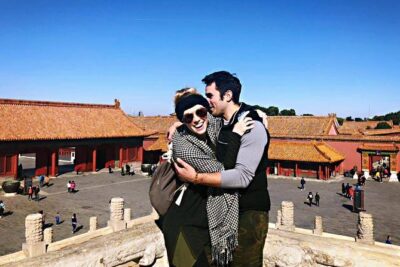
All Inclusive 3-Day Top Highlights Private Tour
Read our review →
3-Day Yellow Mountains, Hongcun Village and Tunxi Ancient Street Private Tour
Read our review →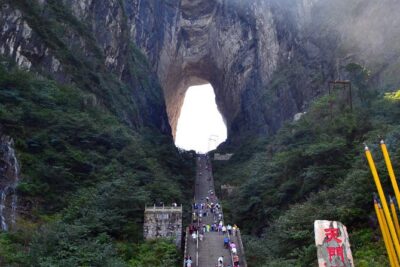
3-Day Private Zhangjiajie Discovery Tour with Glass Bridge
Read our review →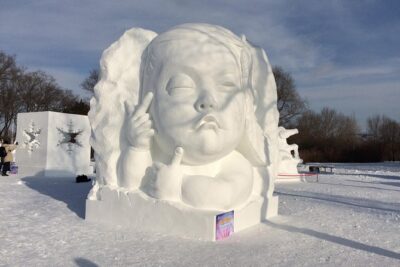
3-Day Harbin City Private Tour in Your Way in Winter Season
Read our review →
3-Day “A Bite” Of Mysterious West Hunan Tour (Zhangjiajie+Fenghuang)
Read our review →
3-Day Private Silk Road Tour of Dunhuang: Mogao Grottoes, Yulin Grottoes, Crescent Moon Pool
Read our review →Browse the lists this tour appears in